
008: Some Paragraphs on Photographs
On memory and art-making, through the lens of an amateur
If you’re in the market for a piece of technology to help you uncover the depths of your anxiety and anger, look no further than FedEx’s package tracker. I had the pleasure of using it a few weeks ago to stalk a box containing my new camera, which was slated to arrive on a frigid day at 11:10 a.m. Resigned to my apartment because the delivery required a signature, I sat at my desk and refreshed the tracker roughly 10,000 times in the span of nine hours, monitoring the little truck icon as it orbited my apartment in what appeared to be the Fibonacci sequence. At one point, the truck stopped at the apartment complex across the street before rolling south and I fought the urge to run it down like a feral dog.
After spending an unnerving amount of time in subzero temperatures, the delivery finally appeared at 6:00 p.m. I answered the door, scribbled illegibly on the delivery woman’s pad, set the box on the table, and carefully removed its contents: a Fujifilm XS-10 body, an 18-55mm lens, and a 35mm lens, all buried under 45 pounds of styrofoam. Holding the cold metal frame in my hand, my indignation toward FedEx and its package tracker melted away. I desperately wanted to test it out, but darkness had fallen and the battery held no charge. I set it on the counter where it taunted me for the rest of the night.
At sunrise, I bundled up and strolled around the block. The low sun cast long shadows and the morning chill stabbed at my contacts. 35mm attached, I played around with the configurations and snapped a few photos.
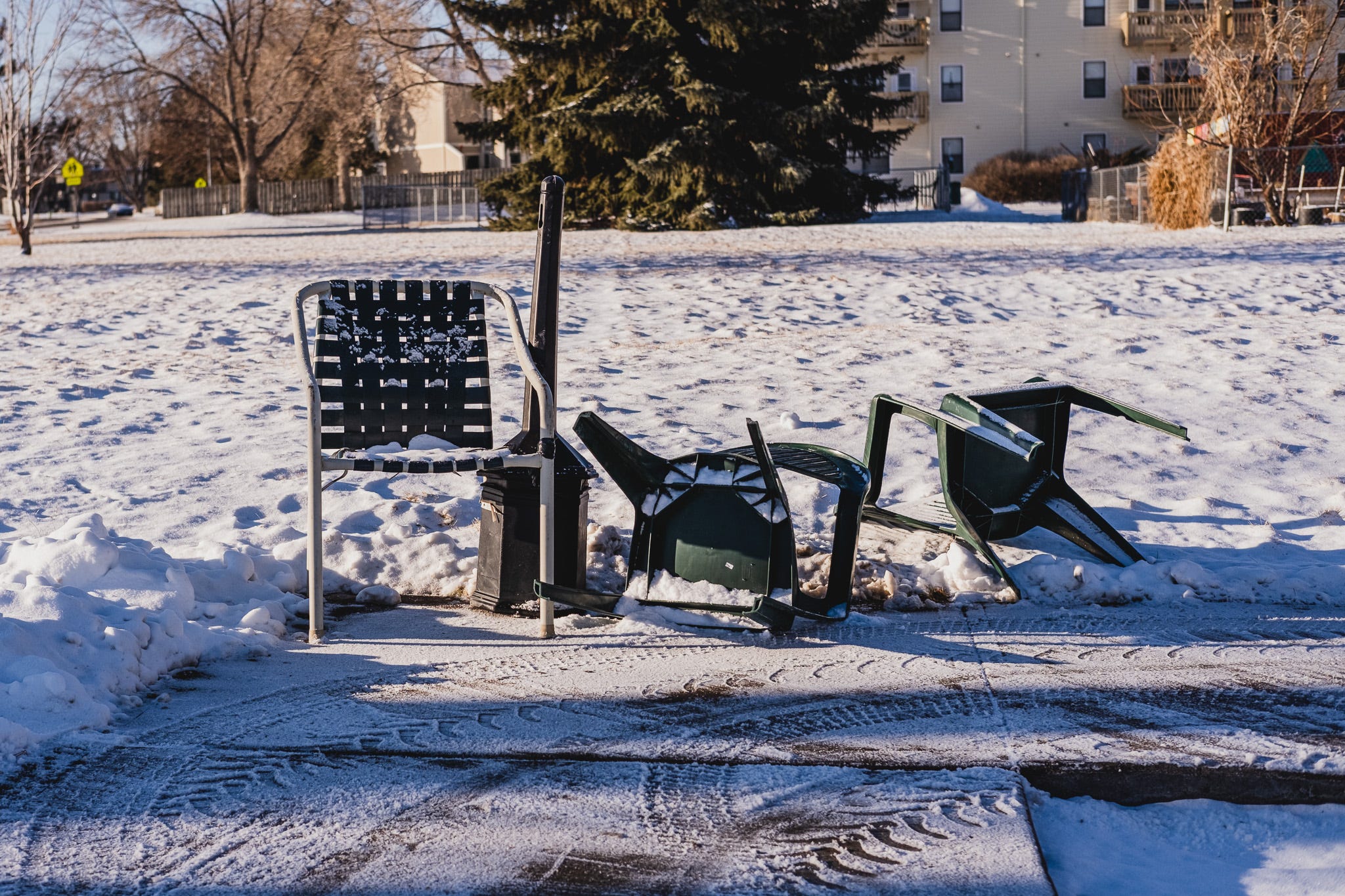
Outside a retirement home, some abandoned chairs encircling a smoking receptacle.
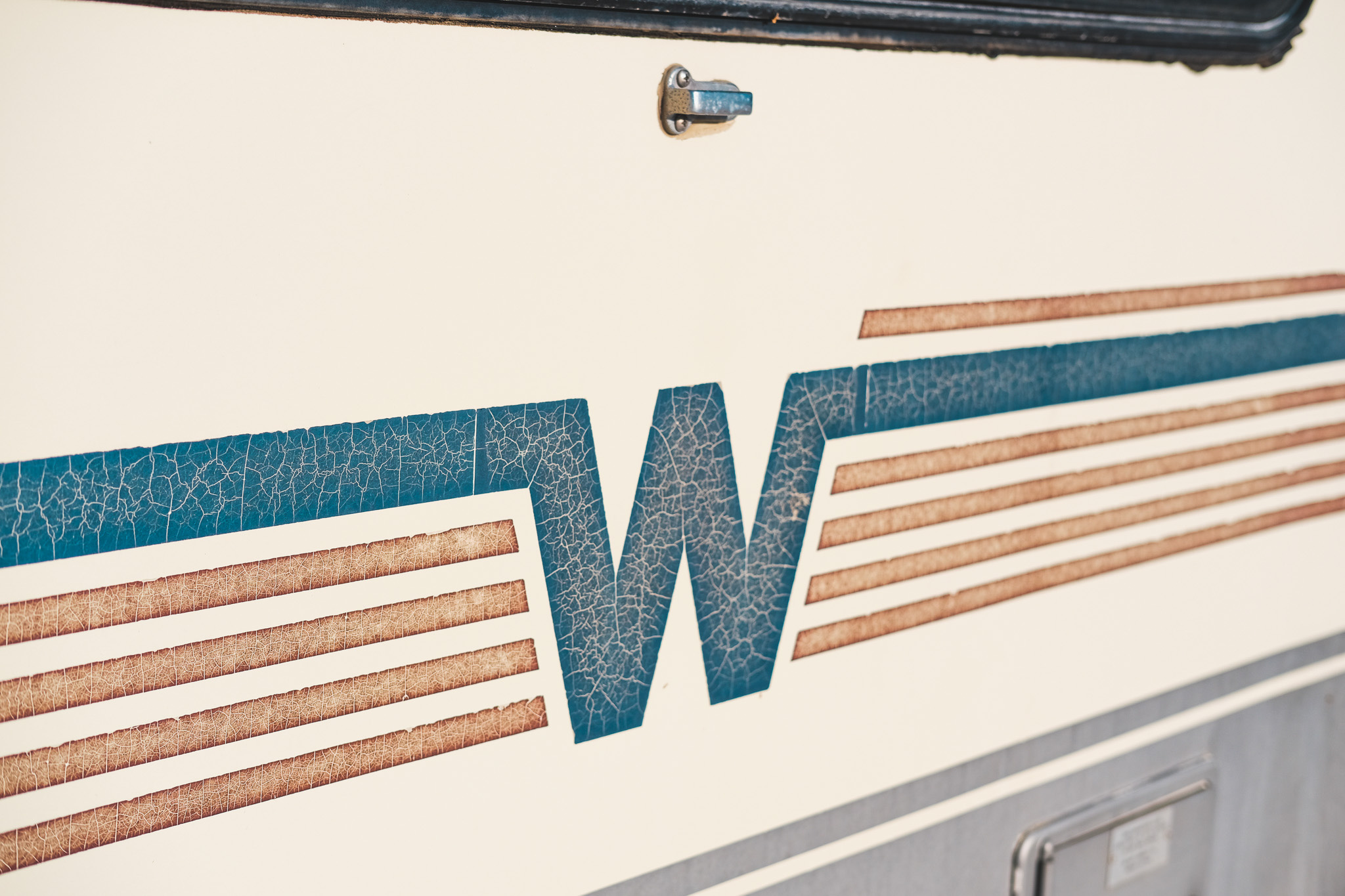
An old Winnebago parked a few yards away.
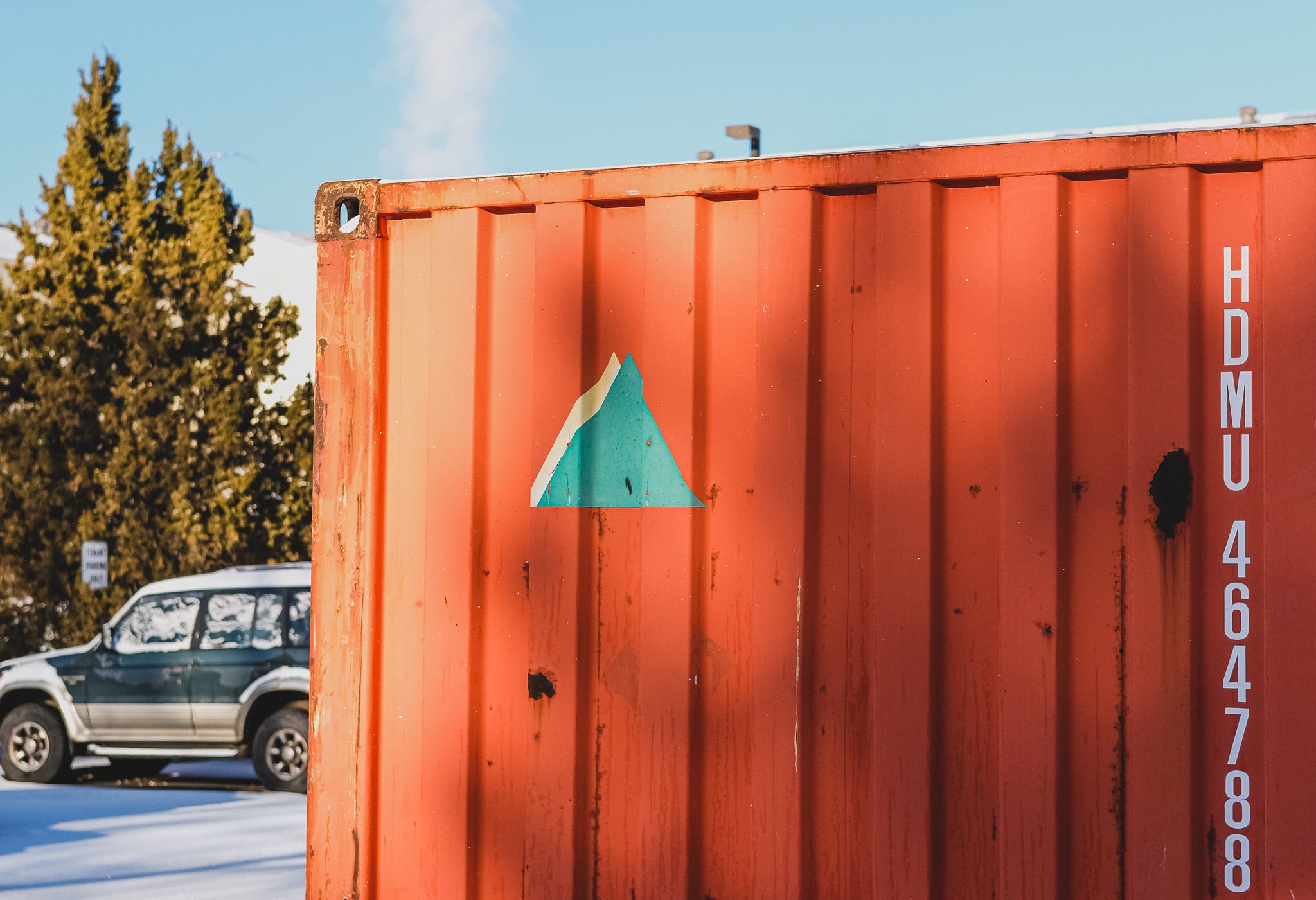
A bright orange shipping container.
A football field covered in a blanket of snow.
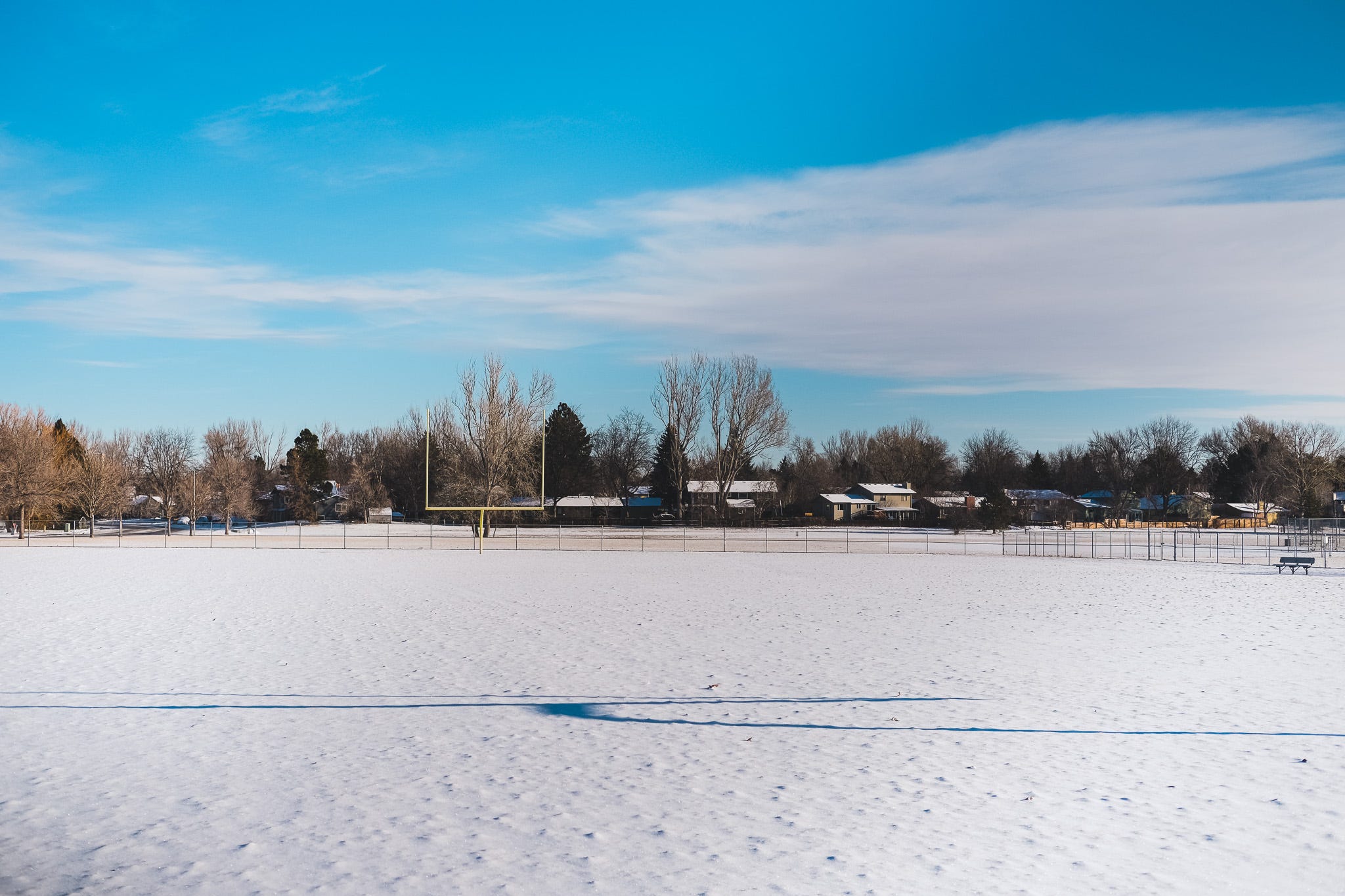
I lost feeling in my hands, returned home, and uploaded what I shot into Lightroom. To see how the Fujifilm’s color specs differed from my other cameras, I went back in my library and pulled random photos from the last few years, getting lost in a scroll of recent memories I’d too soon forgotten.
Like my mother’s photo albums contain a record of my childhood, my Lightroom library showcases my time as a photographer, which is very short and pretty bad. Go back to 2020, when I bought my first camera (a Canon M50) and you’ll see some true mediocrity, a reel of a novice slowly learning the relationship between shutter, aperture, and ISO, the principles of composition and lighting, and the limitations of editing software — things I’m still figuring out today. You’ll see my battle with blur and grain in darker settings. You’ll see landscapes that appeared much grander in my line of vision than through my lenses. And you’ll see some horrific overediting trying to make up for it. Yet knowing how bad those shots are and how embarrassed I’d be if anyone caught a glimpse, I choose to keep them.
I blame my chronic sentimentality. Because my brain is primarily filled with radio static, I depend on exterior elements to remind me of where I’ve been, what I’ve seen, and who I’ve crossed paths with. A song, smell, flavor, memento, even a street name is powerful enough to reveal a fossil in the foggy landscape that is memory. But, like many, my favorite way to navigate this terrain is through photographs.
For me, the most interesting part of a photograph is what lies outside the frame. A photo serves as a truss on which I can reconstruct a memory, sturdier and more honest than a vocal tale or the written word. You could argue that video is the most accurate way to relive the past, but I find it to be a passive experience compared to the photo. Unlike a video, a photograph’s frame and content are solidified in time, eternally unmoving. Where the motion of a video loads my visual cortex, the stillness of a photo leaves some room for my slow brain to work. This is not to say a photo is motionless, it’s just that the movement is happening internally — it invites me to draw upon my memory and imagination to extend its frame like I’m some sort of anamnestic cartographer. I’m not merely reacting to the medium, I’m engaging with it, which any work of art asks us to do. (I’m not saying video isn’t art — it just requires a different type of attention.)
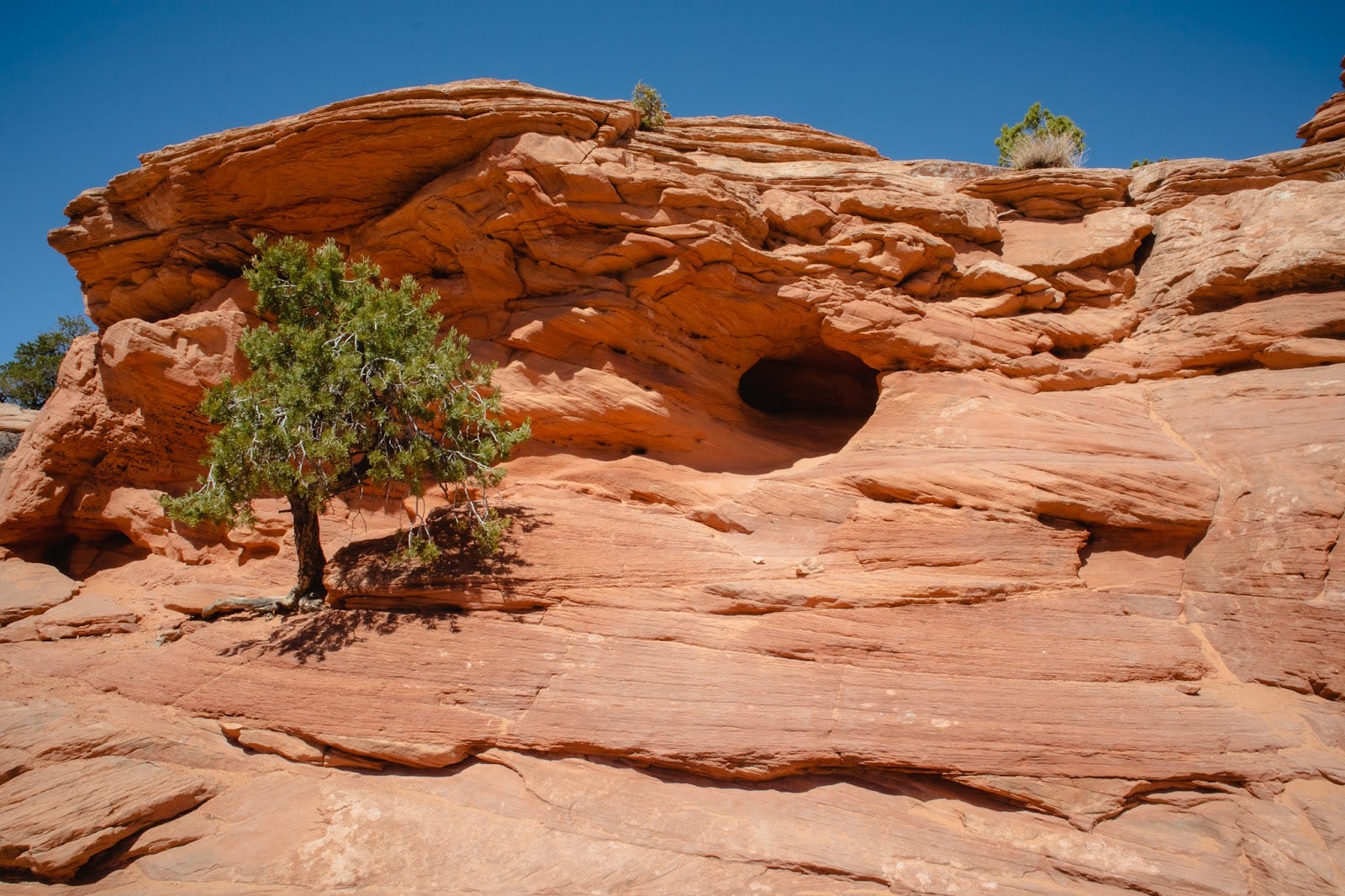
For example, when I look at this photograph from a trip I took to Canyonlands two years ago (which is far from a work of art), I see not just a cool rock formation and a tree sprouting from sandstone, but the triad of squealing children scrambling up the rock directly after this was taken. The sunburnt old couple to my right conversing softly as they look out over the canyon and into the La Sal Mountains. I feel the cool morning desert air, which, in an hour, would feel like Chalula breath on my skin. For a moment I’m plucked from my desk and dropped back into Utah, recreating a space in time I was happy to inhabit, and, though differently, I’m happy to inhabit again.
I know. Real groundbreaking stuff here. Photo help me remember! Great observation, Austin! Here’s a ribbon and a Target gift card!
Beyond memory, I’ve found another weird utility in keeping these photos. It’s the same reason my Google Docs is 87% full. Stowed away in the depths of my Docs are countless pages of abandoned writing dating back to high school — abandoned because they sucked. (Even then I was a better reader than a writer, a better critic than creator. I know shitty writing when I read it, mostly because, as a moody 16-year-old, I wrote a lot of it.) (I still do.)
When I’m stifled by creative impotence, I like to go back and click through these unfinished works, not to torture myself with embarrassment (which happens anyway), but to reorient myself in context. In real-time I can witness a younger me finding his voice and style, writing cleaner sentences, deploying new rhetorical tools, and trying to attract romantic partners in the only way he knew how. I see different types of growth from 2015 to 2018, 2018 to 2020, 2020 to now. Yes, I shudder at most of the writing, but that’s a good thing. If I mistook this rubbish for gold, we’d have a huge problem.
Doing this lends me some grace. Perfectionism has been a bigger hindrance than a helper, sucking the joy from what was once its largest source. The self-prescribed pressure to create flawless work ironically keeps me from creating anything at all, which then denies me the pleasure I find in sharing that work and, in the future, critiquing that work to become a better writer. When I take a moment to reflect on my context — to understand that, though I’ve been doing this for a third of my life, I’m still just a spry young boy with an undeveloped frontal lobe — I relax, remembering that the work doesn’t have to be impeccable, just intentional. The last thing I want to do here is burden you with bad writing, but to be fair, this is called Garbage, He Wrote. You literally signed up for this shit.
Mechanically, photography and writing are dissimilar, but methodically, I’m recognizing a similar journey. It’s been fun to test out different styles, approaches, and tools these past few years, learning how I see the world through a different medium. I have so far to go, so much to learn. Historically, what’s kept me from trying new things is the fear of being bad at them. Now, I understand that’s the best part. Years from now, I hope I come across the latest in my Lightroom library and vomit all over myself. It’ll be a sign that I’ve done something right.
A line from Brian Phillips comes to mind: “Small imperfections, which make a work human, make it beautiful.”
A good friend put it more concisely: “Make more, think less.”